Piping Isometrics: The Most Overlooked Safety Document in Process Plants
The Most Overlooked Safety Document in Process Plants
Date: 1st April 2026
There are certain documents that rarely get much attention until something goes wrong. Piping isometrics are one of them.
They’re not particularly exciting, and they rarely get mentioned in project summaries or progress meetings. Most of the time they sit quietly in project folders or document management systems.
But when an audit arrives, a modification is planned, or a safety review starts asking questions, those drawings suddenly become very important.
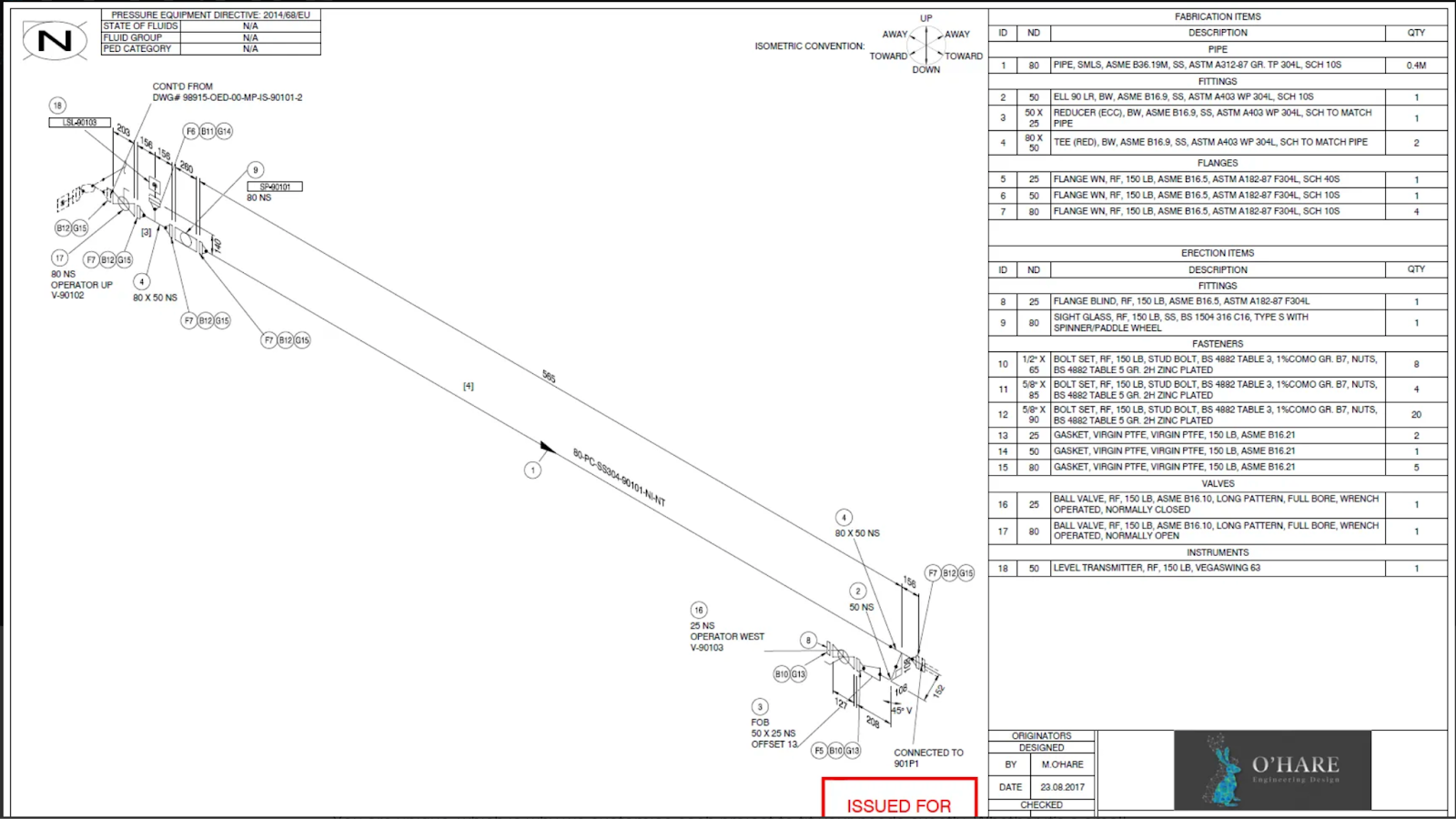
That’s because piping isometrics are far more than fabrication drawings. They show how a piping system has actually been built. They capture details about materials, welds, routing, valves, pressure ratings and testing requirements. In other words, they provide the technical record of what exists on site.
In industries where small mistakes can lead to serious safety incidents, that level of clarity matters.
Over the past few years, however, I’ve noticed more projects trying to reduce the amount of work put into piping isometrics. It’s usually driven by budget pressure or tight delivery schedules. Pipework gets “run on site” and the drawings are treated as something that can be finished later.
On the surface that can seem efficient. In practice it often creates risk.
Piping isometrics are not just a paperwork exercise. They are a key part of safe plant design, regulatory compliance and long-term asset management. When they’re skipped or poorly produced, the consequences can be expensive and occasionally much worse.
Why Piping Isometrics Are Not Optional
On many projects, piping isometrics fade into the background once construction is complete. They might not be looked at again until maintenance work is planned or a modification is proposed.
But when those situations arise, they quickly become one of the most important sources of information available.
Unfortunately, it’s becoming more common to see projects where the production of isometrics is reduced or delayed in an attempt to cut costs. In some cases, pipework is installed using general arrangement drawings and site sketches instead.
The short-term savings can look attractive. The problem is that this approach removes an important layer of engineering control.
Without detailed isometrics, there’s less opportunity to identify issues before installation. There’s also far less documentation available to demonstrate that the system meets the relevant codes and standards.
In a highly regulated industry, that can become a serious problem later on.
What Piping Isometrics Actually Represent
It’s easy to think of piping isometrics as drawings used mainly by pipefitters during fabrication. In reality, they serve a much wider purpose throughout the life of a plant.
A properly prepared isometric provides a clear representation of the piping system. It shows pipe sizes, routing, fittings, valves, weld locations and connection points. It also includes information on materials, pressure ratings, slopes and testing requirements.
That level of detail supports several critical activities.
Construction teams rely on it to install systems correctly. Maintenance teams use it to understand how systems are configured. Operations teams depend on it when managing and troubleshooting plant equipment.
In high-hazard environments such as chemical processing facilities, accurate information about pipework isn’t optional. Something as simple as an incorrectly rated fitting or an undocumented bypass can create operational or safety risks.
Isometrics provide the clarity needed to avoid those situations.
Standards and Codes
Industrial piping systems must comply with established engineering codes and standards. These standards exist to ensure systems are designed, built and maintained safely.
Piping isometrics play an important role in demonstrating that compliance.
Depending on the type of facility and the regulatory environment, piping systems may need to align with standards such as:
- ASME B31.3 for process plant piping
- ASME B31.1 for power generation systems
- EN 13480 for metallic industrial piping
The specific standards vary depending on the plant and jurisdiction, but the underlying principle is consistent: systems must be properly documented and traceable. Isometrics form a key part of that technical record.
Piping Isometrics as Safety Documentation
Another important role of piping isometrics is within plant safety documentation.
When incidents occur, or when systems are reviewed as part of safety studies, engineers need an accurate picture of how the piping is configured. Isometrics provide the “as-built” representation of the system: what actually exists on site rather than what was originally intended in design drawings.
This information supports a range of safety activities, including:
- Process safety management
- Hazard and operability studies (HAZOPs)
- Pressure system assessments
- Isolation planning and maintenance procedures
- Emergency response planning
If accurate documentation doesn’t exist, it becomes very difficult to verify that a system meets safety requirements.
In regulated industries, being able to demonstrate compliance is essential.
The Cost of Cutting Corners
The risks associated with poor documentation are not theoretical.
I worked with a client several years ago who had installed a large skid with a complex piping system. To speed up delivery, the installation relied on basic construction drawings and informal site sketches rather than full isometrics.
The issue only became apparent during an inspection.
Regulators identified that the piping did not fully meet code requirements, and the client lacked the documentation needed to demonstrate compliance. Without proper isometrics, there was no clear record of materials, weld traceability, pressure ratings or design intent.
The result was significant rework. The entire skid piping system had to be stripped out and rebuilt to meet the required standards.
What might have been a relatively small investment in engineering documentation ended up becoming a much larger cost in rework, delays and operational disruption.
A Critical Investment in Risk Management
Piping isometrics may not be the most visible part of an engineering project, but they are one of the most important.
They provide a clear record of how piping systems are designed and built. They support safe installation, effective maintenance and regulatory compliance throughout the life of a plant.
In industries where the cost of failure can be high, good engineering documentation isn’t an administrative burden, it’s risk management.
And in many cases, the cost of doing it properly at the start is far lower than the cost of fixing it later.
Get in touch to start your project off on the right foot.